
Traditional Thai massage in Düsseldorf
Authentic Thai massage with traditional pressure techniques, passive stretches and individually adjusted intensity.
Nuad Thai - traditional Thai massage at PHANNEE by piani in Pempelfort
Experience traditional Thai massage at PHANNEE in Düsseldorf-Pempelfort. The centuries-old Thai massage – also known as Nuad Thai – combines targeted pressure techniques with passive stretches and mindful body movements.
Our traditional Thai massage is a full-body massage in which the masseuse uses her hands, thumbs, palms, elbows, and knees, among other techniques. The intensity is individually tailored to your personal comfort level.
PHANNEE by piani. – authentic Thai massage at Kaiserswerther Straße 33 in Düsseldorf-Pempelfort.
What is a traditional Thai massage?
Traditional Thai massage differs significantly from a classic oil massage. While oil massages primarily focus on flowing massage strokes, traditional Thai massage combines rhythmic pressure with passive stretching and extension movements.
The treatment typically encompasses the entire body. Different areas are treated successively with targeted pressure techniques and stretched through guided movements. The massage therapist may use not only her hands and thumbs, but also her palms, forearms, elbows, and knees.
This combination makes traditional Thai massage a particularly versatile form of massage, combining both vigorous and calming and relaxing elements.
This is how a traditional Thai massage at PHANNEE works.
At PHANNEE, the traditional Thai massage is individually tailored to you. Before we begin, you can let us know if you prefer a gentler or more vigorous massage and if certain areas of your body require special attention.
We perform our traditional Thai massage comfortably on massage tables. We combine the characteristic pressure, stretching, and massage techniques of Thai massage with our skin-friendly version using coconut oil. The oil allows for pleasantly gliding massage strokes and complements the traditional techniques for a unique massage experience.
During a full-body massage, the various areas of the body are treated systematically. Targeted pressure techniques alternate with passive movements, stretches, and different massage strokes. The intensity is adjusted to your personal comfort level.
Those who prefer a particularly intensive and vigorous treatment can choose our specially designed Thai Strong & Sport massage at PHANNEE.
Traditional Thai massage – relaxation, movement and body awareness
Traditional Thai massage combines targeted pressure techniques with passive stretches and guided movements. Different areas of the body are treated sequentially, and the techniques are individually adapted to each person.
The alternation between pressure, stretching, and movement allows the treatment to be perceived as both activating and relaxing. Many people particularly appreciate traditional Thai massage after physical exertion, prolonged sitting, or simply as a conscious break from everyday life.
At PHANNEE, we perform traditional Thai massage on comfortable massage tables. Although the traditional form is sometimes practiced on floor mats in Thailand, we have adapted our facilities and procedures to treatment on massage tables.
The focus is always on personal well-being. The intensity can be adjusted from gentle to vigorous. Those who specifically desire a particularly intensive treatment can choose our Thai Strong & Sports Massage.
The origins of traditional Thai massage
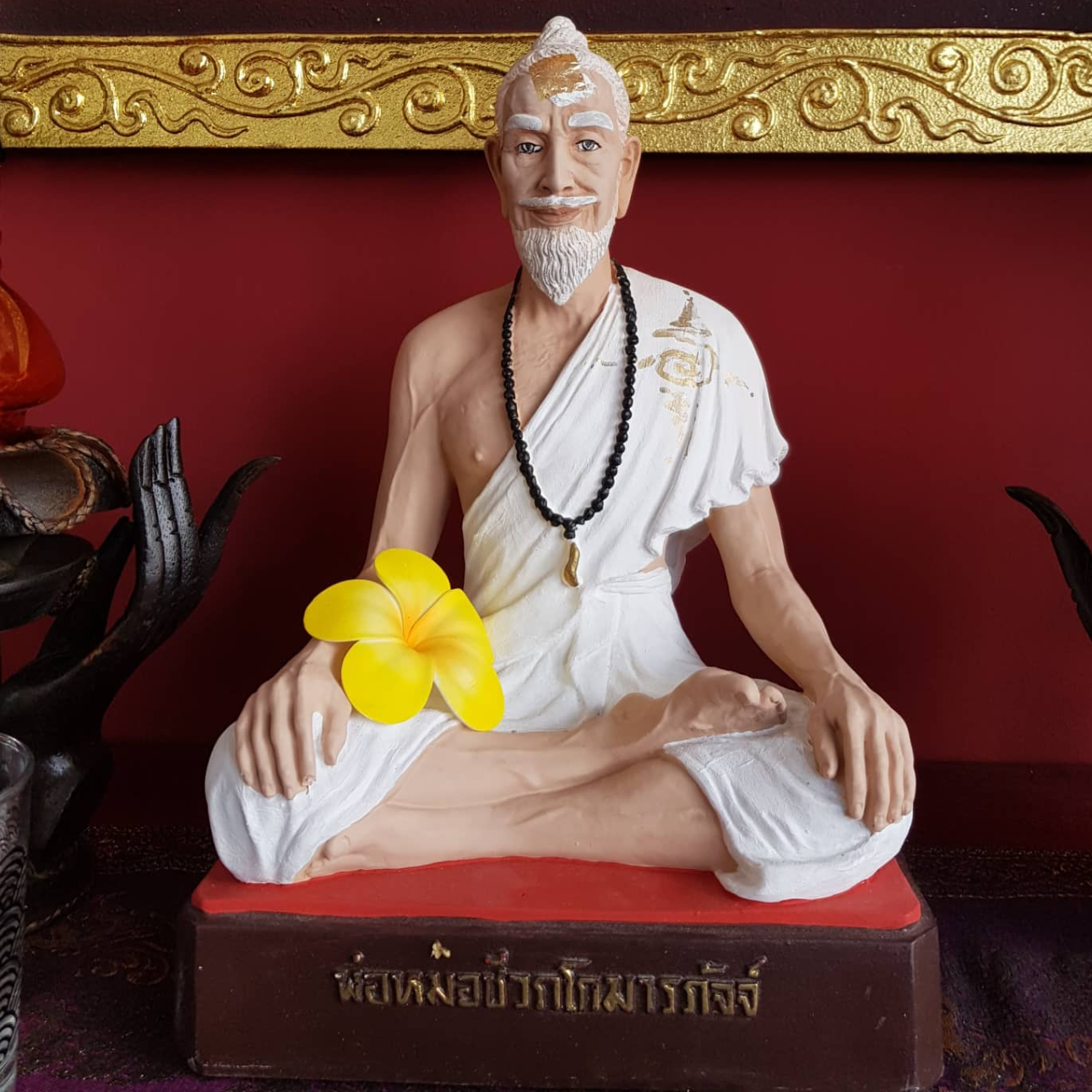
Jivaka Komarabhacca and the history of Thai massage
The roots of traditional Thai massage reach far back in time. A central figure in its tradition is Jivaka Komarabhacca, a physician, the supposed personal physician of Buddha, who, according to Buddhist tradition, lived more than 2,500 years ago during the time of Buddha.
In Thailand, Jivaka Komarabhacca is still revered today as an important figure in traditional healing arts. His story is closely linked to the cultural and spiritual tradition from which Nuad Thai also developed.
Knowledge of traditional treatment methods has been passed down through many generations and has become an integral part of Thai culture. Traditional Thai massage combines physical techniques with an attitude of mindfulness and concentration.
The Thai massage practiced today is the result of this long development. It is characterized by targeted pressure techniques along various areas of the body, as well as passive stretches and movements, which together define the unique character of Nuad Thai.
She was then brought to Southeast Asia by monks.
Traditional Thai massage, formerly also called Siam Thai massage, is still strongly connected to Buddhism in its current practice.
It is practiced with Metta (a term used in Southern Buddhism for loving-kindness). See also our article: Compassion (Metta) and Mindfulness (Sati) in Thai Massage
The masters are usually deeply religious people who perform the massage in a state of mindfulness, equanimity, compassion, and empathetic joy.
Despite the term "Thai massage" being used in common parlance, this complex treatment is not an "anatomical" massage in the Western sense.
The traditional teachings behind Thai massage
Traditional Thai massage – TTM for short – follows a holistic understanding of the body. Its traditional teachings assume that the body is permeated by energy pathways.
Its historical and philosophical roots are linked, among other things, to the Indian Ayurvedic system of 72,000 energy lines, known as nadis. Traditional Thai massage focuses on ten selected energy lines, the so-called sen lines. According to traditional teachings, various points along these lines are treated with specific pressure techniques.
According to Ayurvedic principles, the energy pathways are connected to prana, the life force. In Indian tradition, prana is closely linked to breathing. Similar concepts of life force can be found in other Asian traditions, such as Qi in Chinese culture.
These concepts of nadis, sen lines and life energy are part of the traditional and cultural understanding of Thai massage and are not equivalent to scientifically proven anatomical structures.
Breathing, pressure and stretching
Breathing also plays an important role in traditional Thai massage. During stretches and more intense pressure techniques, breathing can change and deepen. Many people find that calm and deep breathing during treatment supports relaxation and regeneration.
Traditional teachings therefore combine pressure, movement, stretching and breathing into a holistic massage experience.
Classic Thai massage as a full body treatment
Traditional Thai massage is understood as a full-body treatment. It extends from the feet to the head and includes various body positions. Depending on the technique, the massage is performed in the supine, side-lying, sitting, or prone position.
At PHANNEE, we perform our massages comfortably on massage tables and adapt the procedure individually to each guest.
During the treatment, the body is partially moved and stretched passively. Various stretching, extension, and pressure techniques are used.
Traditionally, the treatment can also be supplemented by other applications, such as warm herbal compresses or herbal stamps.
At PHANNEE, we offer the herbal stamp massage as a separate spa treatment.
According to the traditional understanding of Thai massage, these different techniques are intended to help bring body and mind into harmonious balance. Concepts of the free flow of life energy and the balance of various forces have been part of Asian health philosophy for centuries.
The techniques of traditional Thai massage
Traditional Thai massage is characterized by the diversity of its techniques. The massage often involves working on specific points and using different parts of the masseuse's body.
The techniques used include thumbs and palms, forearms and elbows, and – depending on the technique – knees and feet. Traditional elements include pressure techniques, acupressure, passive stretching movements, and other time-honored massage strokes.
Elements reminiscent of yoga are also traditionally part of Thai massage. Therefore, it is sometimes described as a form of "passive yoga": The client remains relaxed while the masseuse gently guides the body through various movements and stretching positions.
Traditional techniques can include so-called "walking on the back." However, the specific techniques used depend on the type of massage and the individual treatment.
Traditional Thai massage in Thailand
In Thailand, traditional Thai massage is generally understood as a comprehensive treatment. Traditional sessions can last significantly longer than short Western massages, often taking one to two and a half hours.
Thai massage is deeply rooted in everyday culture in Thailand. It is practiced in various contexts and can be found both in private settings and in professional massage parlors and parts of the Thai healthcare system.
Traditionally, Nuad Thai is not understood solely as a short-term relaxation treatment, but is part of a broader cultural understanding of well-being, personal care, and preventative healthcare.
Traditional Thai massage and physical well-being
In Germany, we offer traditional Thai massage at PHANNEE as a wellness treatment for relaxation and well-being. It does not replace medical, physiotherapeutic, or other forms of treatment.
The pressure techniques, passive movements, and stretches used in Thai massage can be perceived by clients as pleasant for the muscles and overall well-being. Movement, pressure, and stretching can also stimulate local blood flow and are often associated with a feeling of physical relaxation.
Traditional Thai massage combines a centuries-old Thai tradition with a holistic massage experience that involves the entire body.
Nuad Thai – Thai massage is an intangible cultural heritage of humanity.
This is what UNESCO says about Thai massage (Nuad Thai):
The UNESCO report on the "World Heritage" Nuad Thai - Thai massage dated 12.12.2019